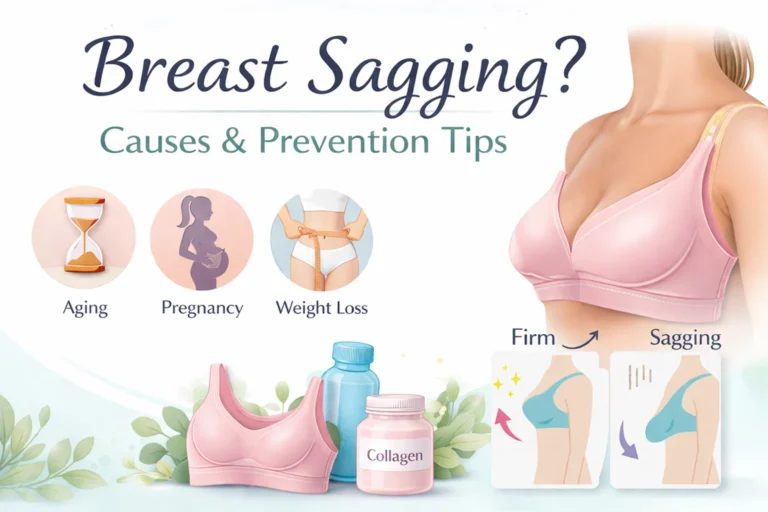
Breast sagging, medically known as breast ptosis, is a natural change that occurs over time in your body and affects as per varying degrees. While sagging is often perceived as a cosmetic concern, it is a very normal part of the body’s evolution and not a sign of poor health. But understanding why breast sag occurs, what influences it, and which preventive measures are supported by science can help many women make realistic choices about breast care and body confidence. So, let’s begin!
At a Glance: Breast Sagging ExplainedBreast sagging (ptosis) is a natural change caused by ageing, body weight, pregnancy, and loss of skin and ligament elasticity, as breasts contain no supportive muscle. It cannot be fully prevented or reversed without surgery, but proper support during exercise, stable weight, and healthy habits may help delay it. Understanding these normal changes helps women make realistic, science-based choices about breast care and body confidence. |
What are breasts made of?
Breasts contain no muscles of their own to hold them up. Rather, breasts are made of fat, glands, milk ducts, and a type of connective tissue called the “Cooper’s ligaments,” which are thought to provide some structural support.
Causes of breast sag
Some common causes of breast sagging are:
1) Ageing
As a woman gets older, these ligaments may get stretched and lose elasticity. Breasts may lose fullness and size as they lose their underlying support system of tissue and fat.
2) Improper support during sports
When a woman runs, jogs, or engages in other vigorous exercise, her breasts move in three directions: vertically, horizontally, and in an overall figure-8-like motion. Without a properly fitted sports bra, breasts move too freely and may stretch the Cooper’s ligaments, leading to sagging.
3) Weight loss
Losing weight suddenly or over a period of time can lead to loose skin. As your breasts shrink in size, they also lose their lift. This also occurs in pregnancy.
4) Heavyweight
If you are overweight, you will have additional fat tissue in your breasts, which causes them to be heavier and therefore sag.
Are your breasts sagging??
Breasts are sagging when the nipple and most of the breast more or less point downwards or hang. Are your nipples still perky, or have they started looking downwards? Are they at a lower position in your chest than before?

Did you know:
- Breasts get fatter as you get older. When you’re in your twenties, your mammary glands are comprised of fat, milk glands, and collagen. As you get older, the collagen and milk glands get replaced by, you guessed it, more fat. Unfortunately, the fat doesn’t make the breasts larger. It makes them sag more.
- Sleeping facedown won’t make your balloons deflate, but it will change their shape over time. The best snooze style for your breasts is on your side with a pillow under them for support.
- Cardio workouts like jogging and aerobics can cause your breasts to bounce around. Make sure your sports bras remain elastic enough to minimise the bounce. This will also reduce breast pain.
Breast sag: how to prevent it
To begin with, sagging breasts are natural for an ageing, changing body. In fact, it is an inevitable process. Therefore, the question isn’t how to prevent it, but how to delay its onset. Wear a proper and well-fitting bra, especially when working out.
If you’re thinking of certain workouts that will help prevent breast sag, well, the bad news is that there are little to no muscles in your breasts. Therefore, exercising is not going to help with this case. You should also be wary of creams that claim to lift your breasts, as there is no scientific proof that creams can prevent or slow down breast sag, so don’t waste your money on these!
At the end of the day, breast sag isn’t a disease; it is a natural process, so try to accept it and love your body for being healthy.
Conclusion
Breast sagging is a natural result of time, biology, and life experiences rather than a flaw to be fixed. Hence, when you understand the above normal changes and adapt accordingly, you can focus on your comfort, confidence, and long-term breast health rather than unrealistic ideals.
Frequently Asked Questions
Does breastfeeding make breasts sag?
Breastfeeding itself does not cause sagging. Pregnancy-related breast enlargement, hormonal changes, and skin stretching are the primary factors affecting your breast firmness.
Do I need to wear a bra, especially at night, to prevent sagging?
There is no scientific evidence that wearing a bra, including at night, prevents breast sagging. Proper support mainly improves comfort, not long-term breast position.
Can exercise or chest workouts prevent breast sagging?
Exercise cannot prevent breast sagging because breasts lack muscle tissue. However, strengthening chest muscles may improve posture and provide a slightly lifted appearance.
What lifestyle habits help maintain breast firmness?
Maintaining a stable weight, avoiding smoking, protecting skin from sun damage, and wearing supportive bras during exercise will support overall breast health and skin integrity.
Does breast size affect how quickly breasts sag?
Larger breasts may sag earlier due to increased weight and gravity, but genetics, skin elasticity, and lifestyle factors also play a significant role.